
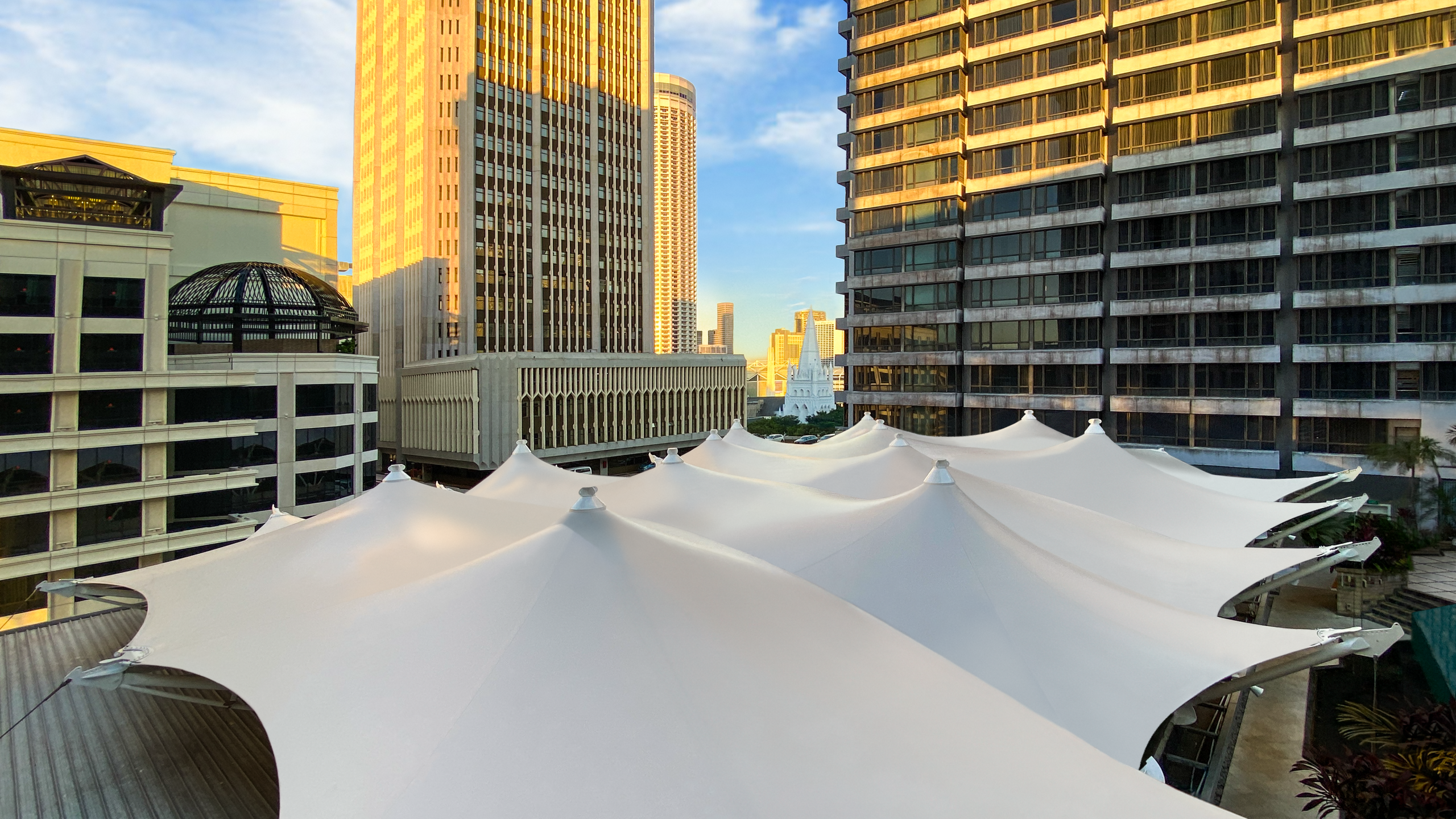
Living in a tropical climate comes with its challenges. With an average year-round temperature of 27°C and consistently high humidity, effective heat mitigation is more crucial than ever. As global temperatures rise and climate concerns intensify in 2025, energy-conscious solutions are becoming a necessity across every industry.
At ADAS, we are experts in creating tensile membrane structures designed to withstand local environmental conditions, from intense sun and heavy rainfall to hurricanes. A testament to our expertise is the LEGOLAND Florida Miniland Canopy. Spanning 30,000 sqm, this structure has withstood both Hurricane Ian and Hurricane Milton in recent years and remains resilient today.
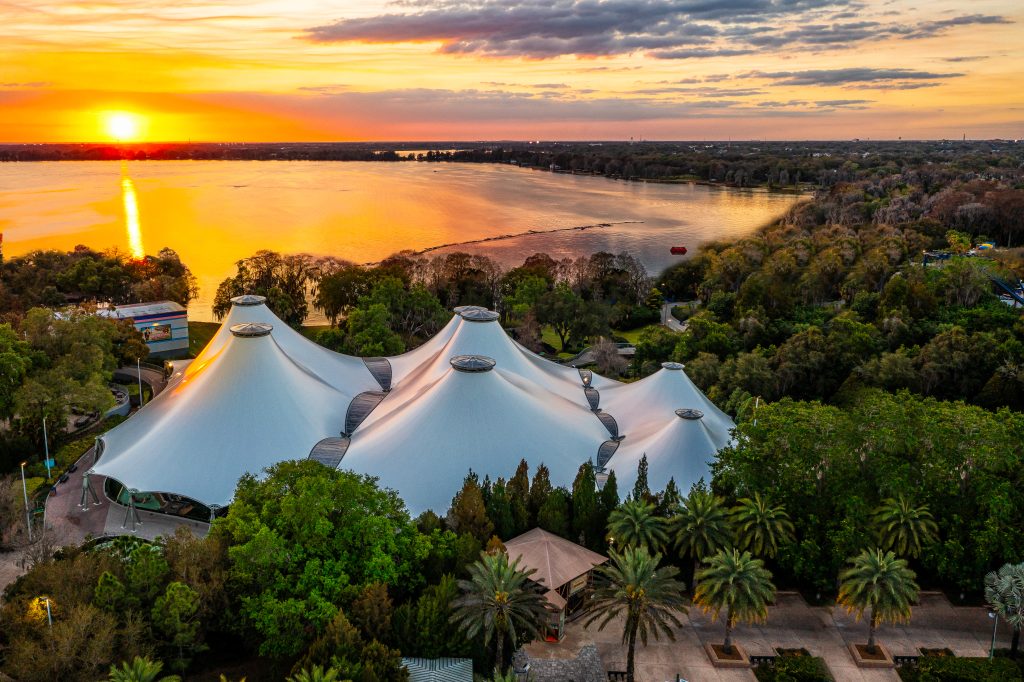
Photo from LLF Miniland
How ADAS assesses thermal comfort:
To optimise environmental performance, we employ Computational Fluid Dynamics (CFD) and other advanced software to predict the user thermal comfort index (UTCI). By shaping membrane forms based on natural ventilation analyses, we ensure efficient airflow throughout the space and identify regions where mechanical ventilation may be required. Material selection is guided by thermal and optical properties, enhancing heat mitigation while maintaining durability and aesthetics. Additionally, our wind-driven rain simulations enable us to design sufficient rain coverage, reducing the ingress of rainwater whilst preserving openness. Although our priority is passive cooling through design, we also integrate mechanical ventilation—such as fans and standing air conditioning units—into our simulations, creating holistic, climate-responsive solutions that prioritizes both comfort and sustainability.
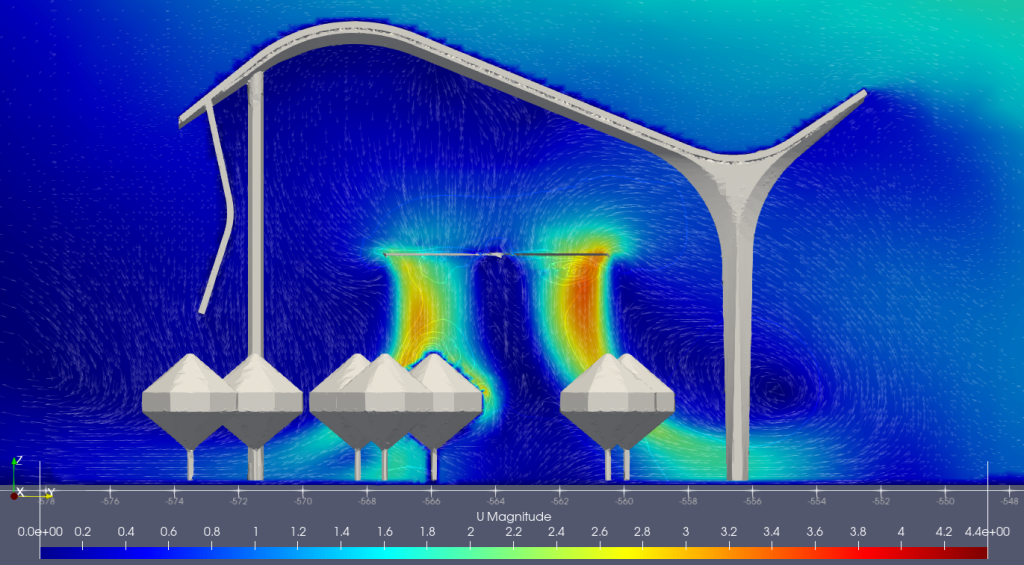
Photo of pkns temp study
ADAS is at the forefront of integrating advanced insulation techniques into lightweight tensile membrane systems, pushing the boundaries of what’s possible.
Thermal management strategies using tensile membrane structures:
Aerogel-Infused PTFE and PVC Systems:
Traditionally, single-layer tensile membrane canopies using materials such as PTFE and PVC offer limited insulation as single-layer systems.
ADAS specializes in the design and construction of aerogel-integrated tensile membrane systems, consisting of two layers of tensioned fabric with aerogel-infused blankets in between for exceptional thermal insulation. As the future of insulation, aerogel surpasses traditional materials with its ultra-low density, high porosity, and superior thermal insulation. Its flexibility ensures that tensile membrane structures retain their signature fluidity and organic form.
We tailor our solutions to meet your insulation needs, offering expert guidance on insulation thickness, material configuration, and U-value optimization. Whether you require specific thermal or optical performance, ADAS is equipped to deliver the most efficient and effective insulation system for your project.
At Peninsula Excelsior Singapore, A Wyndham Hotel, we had the exciting opportunity to enhance the design of the existing lobby canopy. By integrating an advanced Aerogel + PTFE system for the first time in Singapore, we introduced an innovative solution that keeps the lobby cool and comfortable while minimising heat gain. Our meticulous approach to insulation not only improved thermal performance but also helped the client maintain their Green Mark Certification by reducing the roof material’s U-value to below 0.5.
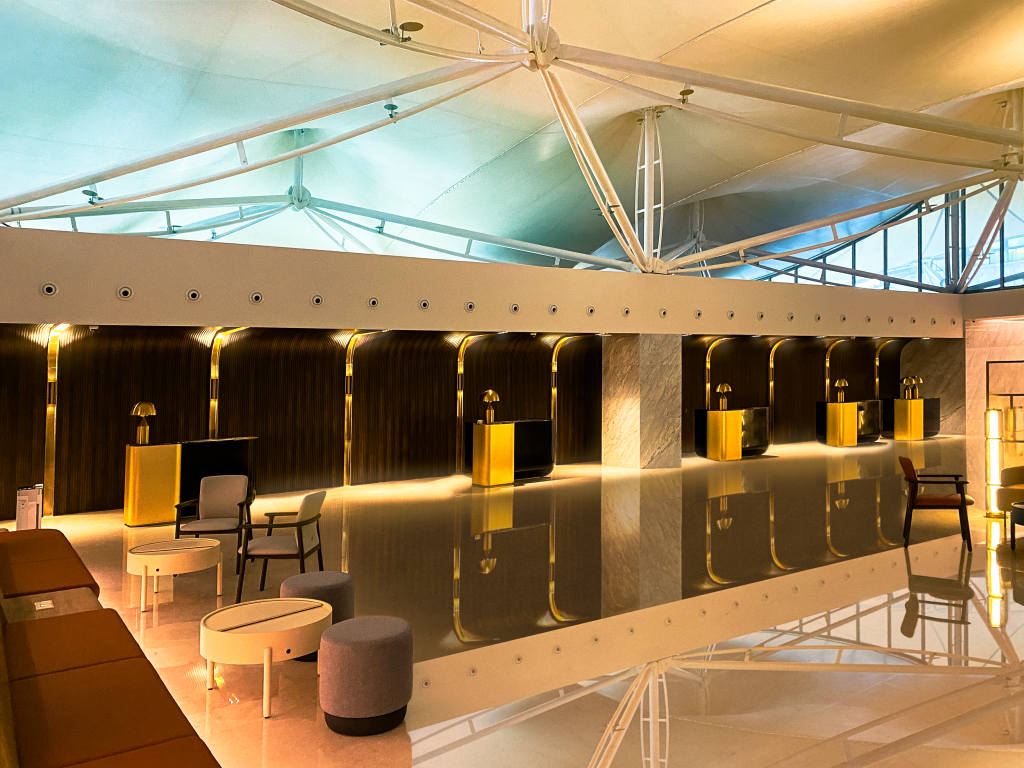
Photo of interior lobby
For transparent solutions:
ETFE, used in cushion systems, remain the most recognized insulation solution in tensile membrane structures. ETFE Cushion systems use multiple layers of ETFE film, filled with air without requiring specialized gases. These cushions offer insulation performances akin to the likes of double layer glazing without the heavy weight of glass panels. The effectiveness of ETFE cushions systems leverage air as a natural insulator, offering:
• Low Thermal Conductivity: Air transfers heat slowly, making it an excellent insulating medium.
• Trapped Air Efficiency: Small pockets of air prevent convective heat transfer.
• Layer Thickness Optimization: The greater the trapped air volume, the better the insulation.
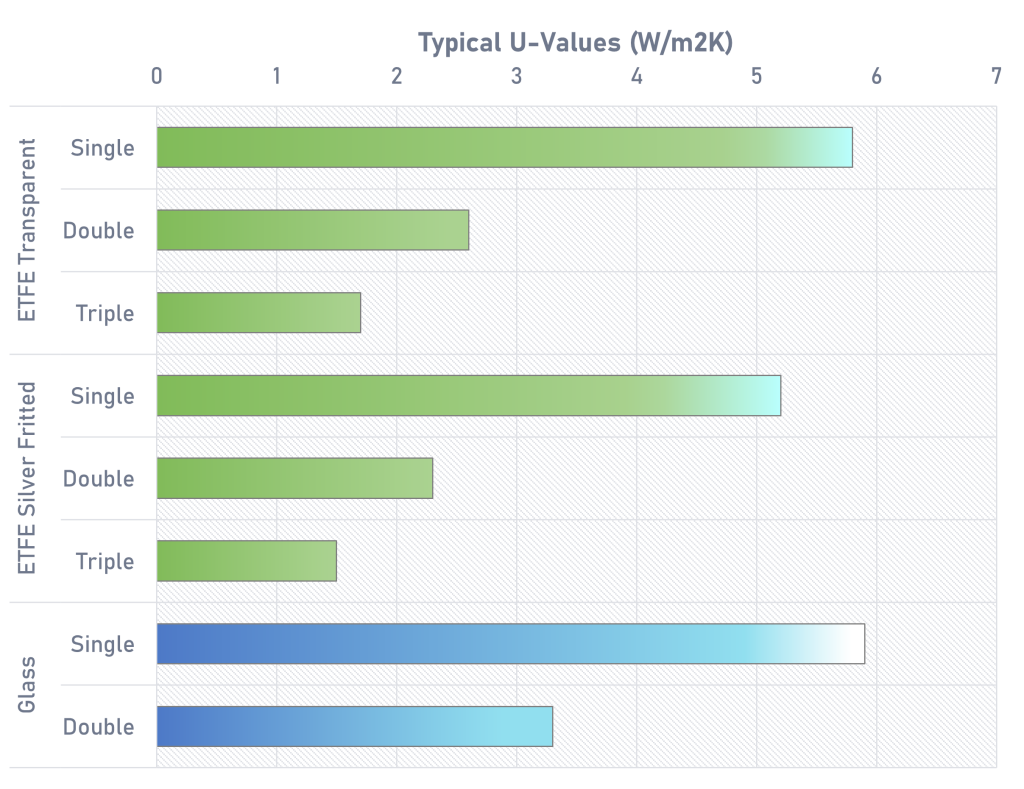
Photo of the etfe graphic for cushion
In seasonal climates, ETFE systems often incorporate three or more films to maintain stable internal temperatures. In tropical environments, a two-layer system is typically used to balance insulation and transparency. To further optimize thermal performance, we utilize fritted ETFE films to reduce the solar heat gain coefficient while maintaining adequate natural lighting.
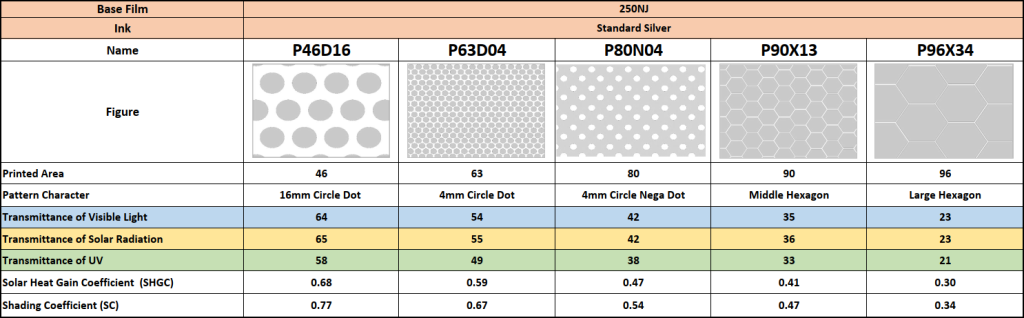
Photo of the fritted ETFE graphic.
Fabric Facades:
Beyond canopies and skylights, ADAS Fabric Facades play a crucial role in thermal comfort. Typically using microperforated tensile mesh fabric, these facades are designed to provide shading, enhance ventilation, and create a visually striking yet functional envelope around structures. Our fabric facades are engineered for:
• Solar Control: Reducing direct sunlight exposure, minimizing heat gain, and lowering cooling costs.
• Ventilation Optimization: Allowing airflow while acting as a shield against wind-driven rain.
• Aesthetic Versatility: Customizable patterns, colours, and branding options to blend seamlessly with architectural vision.
• Sustainability: Lightweight and durable, reducing material consumption and promoting energy efficiency.
By integrating fabric facades with our tensile membrane solutions, we deliver holistic thermal comfort strategies that enhance both the performance and visual appeal of spaces.
Pioneering the Future of Thermal Comfort
Our engineers have the skills, expertise, and passion to bring insulated tensile membrane solutions to life. Whether it’s ETFE cushions, aerogel-infused PTFE, or dynamic fabric facades, ADAS continues to push boundaries—exploring new materials and technologies to create smarter, greener, and more energy-efficient architectural solutions.
Have a project in mind? Partner with ADAS to elevate your design with cutting-edge insulation and superior thermal comfort solutions!